
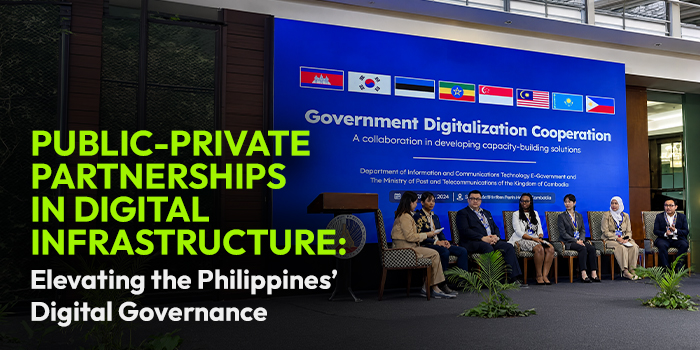
The Philippines is stepping up investments in digital governance to improve public service delivery, transparency and accessibility. Government agencies are working with technology providers to develop and implement solutions such as broadband infrastructure and single sign-on systems. These initiatives aim to streamline administrative processes, improve operational efficiency, and make public services more accessible to citizens.
Together, they form an important part of the country’s broader digital government transformation agenda.
The Philippines has focused on digital governance through several transformative policies, infrastructure initiatives, and cybersecurity measures. Government agencies have been focusing on providing citizen-focused systems that increase transparency, interoperability, and digital access.
Key initiatives in this area include:
Public-private partnerships (PPPs) play an increasingly important role in addressing these challenges by mobilising private-sector investment, expertise, and resources to accelerate the development and implementation of national ICT infrastructure.
Key areas where Public-Private Partnerships can support digital infrastructure development include:
Developing large-scale digital infrastructure requires substantial investment and long-term financial commitments. Public-Private Partnerships help bridge funding gaps by bringing in private-sector capital.
Technology providers bring specialised expertise in supporting system integration, infrastructure management, and the implementation of digital services.
Public-Private Partnerships share the risk of running a project between public authorities and private-sector partners. This can reduce the financial burden on governments while improving project feasibility.
Collaborative infrastructure models are an important part of the Philippines’ broader public-sector digital transformation efforts. They can support the development of essential digital infrastructure, particularly in areas such as nationwide connectivity, cloud services, and digital identity systems.
Partnership-driven deployment models enable government agencies to introduce digital services more efficiently while also maintaining quality standards.
Reliable connectivity is essential to the success of digital government initiatives. Beyond expanding internet access, the Philippines needs secure and interoperable infrastructure that allows government agencies to connect their systems and deliver services more efficiently.
Key areas of development include:
Infrastructure development continues to align with national priorities, including expanding nationwide internet access and improving connectivity across government institutions.
Government initiatives and partnerships with telecommunications providers are helping extend broadband infrastructure to remote provinces and underserved communities.
Digital government services depend on infrastructure that allows different agencies, databases, and public platforms to communicate securely.
Cloud platforms, government data centres, and digital identity systems can work together to improve data management, identity verification and coordination between government agencies.
Improved digital infrastructure can reduce administrative delays, make public services more accessible and support more efficient government operations.
As digital systems expand, effective governance and robust cybersecurity frameworks become essential to ensure accountability, protect sensitive information, maintain system reliability, and build public trust in digital services.
Important considerations include:
Government agencies and technology providers must comply with strict cybersecurity and privacy regulations to protect sensitive public information.
Public-Private Partnership agreements define the roles and responsibilities of public institutions and private-sector partners, helping ensure accountability, operational continuity, and reliable service delivery.
Transparent governance practices and reliable service delivery help strengthen public confidence in digital government platforms.
Long-term infrastructure projects require effective coordination between multiple service providers, technology vendors, and implementation partners.
Digital infrastructure systems must be designed for future scalability while maintaining uninterrupted public access and operational stability.
Public-private partnerships create opportunities to mobilize private investment and expertise for large-scale infrastructure development. As governments look to modernise public services and expand digital infrastructure, these projects can open up new avenues for financing, technology deployment and private-sector participation.
Key opportunities include:
Structuring Sustainable Public-Private Partnership Contracts
Well-structured contracts can ensure that projects deliver value for government whilst remaining commercially viable for private-sector partners.
Finance and Capital Support
Multilateral financing and private investment can help fund major infrastructure modernization projects, supplementing public resources and supporting large-scale development.
Opportunities for Technology Providers
System integrators, cloud service providers, and telecommunications companies are well positioned to expand their role in the government technology sector, contributing expertise and innovative solutions.
Evaluating Long-Term Benefits
Although infrastructure projects often require significant upfront investment, they can generate long-term benefits through improved operational efficiency, reduced costs, and more effective public service delivery.
Aligning Commercial and National Priorities
Public-Private Partnership projects can align the commercial objectives of private-sector partners with national development priorities, supporting greater accessibility and reach in the delivery of public services.
The Philippines’ digital transformation, as explored throughout this blog, is an ambitious undertaking that requires sustained investment, effective public-private collaboration, and a shared commitment to building a more connected and efficient digital government.
From strengthening national connectivity and modernising public infrastructure to improving cybersecurity and expanding digital services, progress depends on combining the right expertise, resources, and long-term investments. Public-private partnerships will be instrumental in turning these priorities into practical solutions.
Join government leaders, policymakers, industry experts, infrastructure developers, investors, and technology providers at GOVNEXT Philippines 2027 to examine the opportunities shaping the country’s digital future. The event will provide a platform to exchange insights, explore emerging technologies, discuss investment and partnership models, and identify practical ways to accelerate the delivery of digital services.
Taking place on 16 March 2027 at the Manila Marriott, Philippines, GOVNEXT Philippines 2027 will bring together key stakeholders to build connections and explore how collaboration between the public and private sectors can help deliver a more connected citizen-focused digital government.
For more information on the summit, visit: https://www.philippines.govnextsummit.com/

All rights reserved. © 2026 Tradepass LLP.